
By Dr. Alicia Schatteman
 Mr. F. Emerson Andrews was an author, foundation consultant, and former president of the Foundation Center in New York according to his obituary in the New York Times in 1978. He was the longtime director of publications and philanthropic research at the Russell Sage Foundation. In 1950, the Russell Sage Foundation produced one of the earliest studies of philanthropic giving in the United States, written by Mr. Andrews.
“Many contributors assume that the essence of wise giving is seeing to it that the whole of their gift reaches the person or persons in need, avoiding charges for “overhead”, “service”, and any but a minimum of staff salaries.” (p. 119).
He warned, some 70 years ago, that it is dangerous to downplay the importance of skilled staff who are needed to deliver services since they should be adequately compensated for their work. Nearly a century later, we are still battling the misperception that the cost of providing necessary services can be provided for free or solely through charity, by low paid staff, or by volunteers. That is an antiquated opinion of the services provided today by over a million nonprofit organizations in the United States, often in contractual arrangements with governments to provide those services.
This myth that overhead is somehow bad was created by a number of so-called charity watchdogs. Certainly, some fraud exists everywhere but these watchdogs defined “worthiness” by setting arbitrary measures of effectiveness such as percentage of funds spent on administration (aka overhead). In August 2016, the Financial Accounting Standards Board (FASB) announced a new accounting standard – known as ASU 2016-14 – which requires nonprofit organizations to report expenses according to the purpose for which they are incurred. This process referred to as functional expense allocation, means that nonprofit organizations must now categorize their expenses by “function” or purpose: Program Services, General and Administrative, and Fundraising. These are also the classifications used on the IRS Form 990, the annual information return nonprofits file with the IRS. These allocations gave the general public, one quick and easy statistic to use as a proxy for nonprofit efficiency and effectiveness except it doesn’t work.
Every holiday season there are news articles about how to find a worthy nonprofit to donate to. Inevitably, this issue of administrative cost comes up. In an article in the Chicago Tribune, Dr. John List, a professor of economics at the University of Chicago is quoted “Make sure to double-check that your charity is legitimate and they’re not making too much money in overhead,” said List. “One rule of thumb people say is make sure $7 to $8 out of $10 are going to the actual cause.” This means, that nonprofit organizations should report they spend 70-80% on programs. I take exception, which others have as well, that these arbitrary cut-offs are legitimate measures of efficiency or effectiveness or that we could reasonably allocate these expenses in the first place since the single largest nonprofit expense is salaries. As a researcher, we could do time studies of all staff all day, every day, and still, we would rely on estimates and spend too much time conducting the study instead of delivering needed services.
How are we still here, fighting the legitimacy of work that nonprofits provide and the true costs of those services? Several reasons. Historically, “charity work” began when an individual or groups of people wanted to address an issue that was not being addressed by the government, such as the work of social reformers during the progressive era. Writing in 1912, Jane Addams wrote about philanthropic work that was starting to turn over to the government, but all of it did not. Charities or philanthropic agencies started this work she called “philanthropic enterprises” such as kindergarten classes and playgrounds.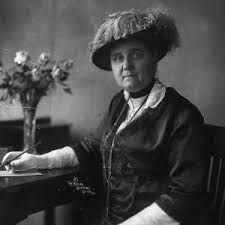
Private philanthropies are “in a certain sense laboratories; that these philanthropies are experiment stations, and when they prove their usefulness by showing that they meet a genuine need, it is not difficult to persuade the public to take them over”.
That has certainly happened in many instances, and not other types of services remain on a continuum of public investment from none to public-private partnerships. The services that Jane Addams wrote about in 1912 have grown substantially and more complex. Yet she admitted even then “the wavering line between the public and private activities so that you can scarcely tell what is philanthropy and what is public service”.
Many have tried, and only partially succeeded, to legitimize the nonprofit sector as an economic engine, a vast labor market, and a provider and sometimes partner in providing essential public services. We fight against a historical and often false belief that charitable work is valued but not compensated. The National Council of Nonprofits recommends:
“Understandably donors want to support a nonprofit’s mission, but many don’t understand that incurring administrative costs is not bad – instead, those costs are essential for mission advancement. Nonetheless, when you make a donation to a nonprofit, you can signal intent for that donation to be spent in a particular way. However, the most useful donation is often an unrestricted donation. This will allow the nonprofit to allocate your donation to the area of greatest need. Sometimes applying that donation to an overhead expense (such as a new roof or new computers) can make program delivery more efficient. Don’t hesitate to reach out to a nonprofit before making a donation to ask how you can direct your donation to make the most impact.” https://www.councilofnonprofits.org/frequently-asked-questions-about-nonprofits
 Some nonprofits and industry leaders have spoken out against the overhead myth (see resources below) but changing public perception is hard. The big charity watchdogs like Charity Navigator and Guide Star were relying solely on the program expense ratio calculations but have since modified their ratings. Unfortunately, too little and too late. Donors have adopted a program expense ratio as a way to measure effectiveness. There is no data or research to link program expense ratios to effectiveness because there is no way nonprofit organizations could dedicate the staff time and resources to track hour by hour how they spend their time and then test the relationship for outcomes. They are dealing in people’s lives, not producing cars. Impacts are hard, failure is expected, and the timeline is longer than a one-year reporting form.
There is still a place for charity, meeting an emergency need at the time people need it, which is done by many faith-based organizations, often with all volunteers. But lumping all nonprofit work as charities downplays their critical role in public service provision that the United States has adopted over many decades. The government has chosen to work in partnership with nonprofit organizations instead of providing these services themselves, and the reasons are many. Nonprofits may be closer to a community, more trusted, more in touch with the needs of individuals. Nonprofits can also subsidize government investment with philanthropic funds (fundraising) and the use of free human resources (volunteers). Nevertheless, nonprofits operate like a business, with a need for professional, well-qualified staff who deserve to be fairly compensated for their investment in education and training.
Let’s call charity what it is, necessary and quick response to an immediate need. Let’s also admit that nonprofit organizations need to invest in people, technology, buildings, insurance, utilities, and marketing to be an effective 21st-century organization. Over the last year of this pandemic, strong nonprofit organizations that are well managed have a stronger chance of surviving. Their efforts and leadership cannot be summarized by a program expense ratio.
Resources
- Philanthropic Giving by F. Emerson Andrews, 1950. Russell Sage Foundation: New York, NY.
- The Overhead Myth http://overheadmyth.com/
- Dan Pallotta TED Talk 2013 “The Way We Think About Charity is Dead Wrong”
- “Philanthropy and Politics” by Jane Addams. 1912. in The Woman’s Citizen’s Library: A Systematic Course of Reading in Preparation for the Larger Citizenship. The Civics Society: Chicago, Illinois.
